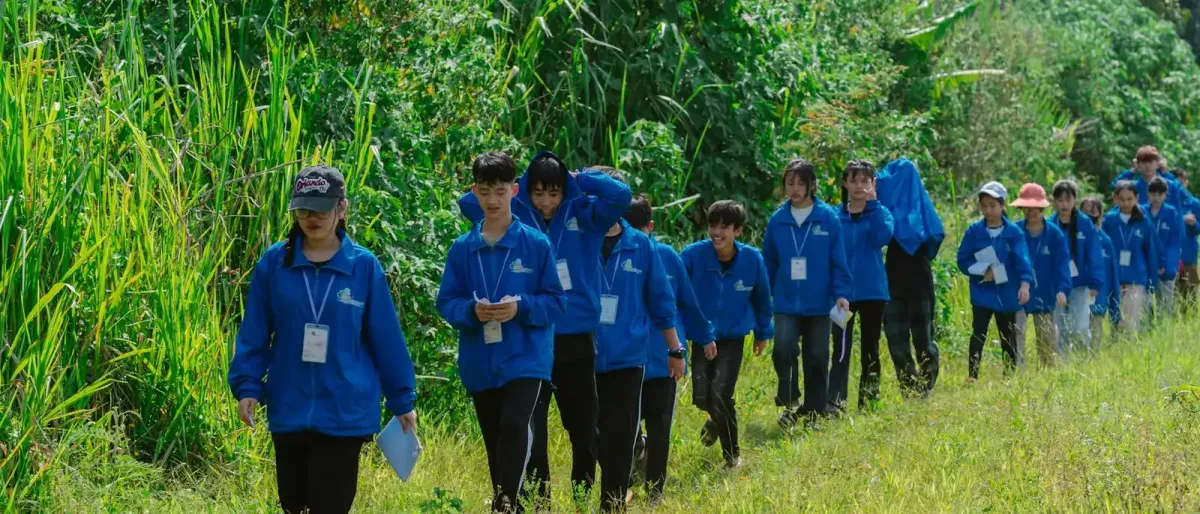
SHSM Environment: Green Careers, Courses, and Certifications
The environment SHSM is Ontario’s most direct Grade 11-12 on-ramp to a 500,250-person environmental workforce that is projected to add 181,750 net job openings by 2033 (ECO Canada, 2024). The sector wraps science, geography, technology, and outdoor education credits around hands-on conservation work, sector-recognized certifications, and a Sector-Partnered Experience focused on the green economy.
The SHSM environment program asks students to complete:
- A 9-credit course bundle drawn from the Ministry-approved environment list
- 7 certifications (4 compulsory and 3 elective) recognized by sector employers
- Cooperative education placements in environmental workplaces
- A Sector-Partnered Experience with a green-sector partner
- Reach-ahead activities connected to a post-secondary destination
This guide covers the sector at a discipline level, the seven certifications, the green career pathways the sector unlocks, the SPE partners coordinators rely on, and how LearnIt supports environment SHSM programming across Ontario.
For readers new to the program, start with our overview of what SHSM is for full context on how the program works across all 19 sectors.

What Is the SHSM Environment Sector?
SHSM Environment is one of 19 Ministry-approved Specialist High Skills Major sectors, governed by the Ontario Ministry of Education’s Specialist High Skills Major Policy and Implementation Guide. Students focus their Grade 11 and 12 learning on the environment sector through five required components:
- A bundle of 8 to 10 sector-aligned credits including co-op
- Certification and training experiences (ICE training)
- Experiential learning and career exploration
- Reach-ahead activities tied to the student’s post-secondary destination
- A Sector-Partnered Experience (SPE) co-designed with a green-sector partner
Environment SHSM runs in publicly funded boards across Ontario, including HCDSB, HWDSB, TDSB, TCDSB, OCDSB, PDSB, DDSB, WRDSB, and the York Region public and Catholic boards. The credit bundle is 9 credits total (4 major + 2 English + 1 math + 2 co-op), and the certification stack is 7 credentials: 4 compulsory (CPR Level C with AED, Intermediate First Aid (formerly Standard First Aid), WHMIS, and Compass/Map/GPS environmental and ecological awareness) plus 3 electives drawn from a Ministry-approved green list. The sector also operationalizes the province’s Acting Today, Shaping Tomorrow framework (2009), Ontario’s standing commitment to environmental literacy and stewardship action in schools. Environment SHSM graduates earn the embossed SHSM seal on the Ontario Secondary School Diploma, a sector notation on the Ontario Student Transcript, and an SHSM Record Card filed in the Ontario Student Record, and they can self-identify as SHSM students on OUAC and OCAS applications through a dedicated checkbox.
Source: Ontario Ministry of Education, “Specialist High Skills Major Policy and Implementation Guide – Environment” (verified September 2026; ontario.ca/document/specialist-high-skills-major-shsm-policy-and-implementation-guide/environment).
For coordinators tracking how this sector fits inside the broader program structure, see our SHSM requirements guide.
What Are the Course Requirements for the Environment SHSM?
The environment SHSM credit bundle is 9 credits drawn from the Ministry-approved environment list. Understanding the bundle at a discipline level helps coordinators map pathways for students headed toward apprenticeship, college, university, and direct workplace entry.
The 9-credit bundle consists of:
- 4 major credits drawn from environmental science, biology, chemistry, physics, Earth and space science, geography (including environment and resource management, physical processes, and spatial technologies), Green Industries technological education, and outdoor or healthy active living
- 2 English credits, one in Grade 11 and one in Grade 12 (either may include a Contextualized Learning Activity)
- 1 mathematics credit (which may include a CLA)
- 2 cooperative education credits completed in an environment workplace setting
Up to 3 environment-related co-op credits may count as major credits beyond the required 2. The Ministry’s approved environment course list is distributed to board SHSM leads annually and shifts year-to-year by board. Coordinators should confirm the current list with their board SHSM lead rather than rely on a third-party compilation.
Source: Ontario Ministry of Education, “Specialist High Skills Major Policy and Implementation Guide – Environment” (verified September 2026; ontario.ca/document/specialist-high-skills-major-shsm-policy-and-implementation-guide/environment).
For the full breakdown of how SHSM credit bundles work across all sectors, see our SHSM requirements guide.
What Certifications Do Environment SHSM Students Need?
Environment SHSM students must complete 7 certifications: 4 compulsory and 3 elective. The compulsory list is one item longer than most other sectors because the Ministry adds a sector-specific compass, map, and GPS competency on top of the standard health and safety baseline.
The four compulsory certifications for environment SHSM students are:
- CPR Level C with AED training
- Intermediate First Aid
- Workplace Hazardous Materials Information System (WHMIS), generic
- Compass, Map, and GPS (Environmental and Ecological Awareness)
Beyond these, students choose 3 electives from a Ministry-approved list. The most career-relevant electives for environment pathways include:
- Geographic Information Systems (GIS)
- Species identification (fish, birds, plants, trees, small mammals)
- Introduction to Stream Assessment Protocol and watershed management
- Soil classification and testing, habitat restoration, sustainable resource management planning
- Hike Ontario certifications (Safe Hiker, Certified Hike Leader), Leave No Trace, Below Zero, Project Wild
- Ontario Hunter Education and Pleasure Craft Operator
- Wilderness first aid and survival, working at heights, fall protection, chainsaw safety
- Life-saving (Bronze Cross or higher), paddling, water and ice safety
- Anti-oppression and allyship training
Source: Ontario Ministry of Education, “Specialist High Skills Major Policy and Implementation Guide – Environment” (verified September 2026; ontario.ca/document/specialist-high-skills-major-shsm-policy-and-implementation-guide/environment).
Several issuing authorities deliver environment-sector training to SHSM cohorts. The Toronto and Region Conservation Authority runs SHSM certifications in water quality, habitat restoration, species ID, and GPS. Esri Canada offers a five-hour SHSM Environment GIS module on ArcGIS, and Hike Ontario delivers Safe Hiker and Certified Hike Leader.
A note for coordinators: the Ministry list does not include a standalone Climate Action certification. Coordinators wanting a climate-themed credential typically route students through the sustainable resource management planning or habitat restoration electives, or design a climate action project into the SPE.
For the complete certifications guide across all 19 sectors, including delivery models and provider selection, see our SHSM certifications and ICE training guide.
What Green Career Pathways Does Environment SHSM Lead To?
The environment SHSM connects to one of the fastest-growing pathway maps in Ontario. ECO Canada’s 2024 Ontario workforce snapshot reports about 500,250 environmental workers province-wide, roughly 1 in 16 Ontario workers, with 181,750 net job openings projected by 2033. Sustainability is the top specialization for 2033 openings (84,400), followed by environmental health and safety (75,940) and natural resource management (74,910). The Ministry maps the sector to all four destination streams: apprenticeship, college, university, and direct workplace entry.
Environment SHSM prepares students for green careers across the four Ministry-defined pathway streams:
- Apprenticeship pathway: landscape and horticulture technicians, arborists, and skilled-trades roles supporting parks, urban forestry, and ecological restoration
- College pathway: conservation officers, forestry and ecosystem management technicians, environmental technicians, geomatics technologists, and aquaculture specialists at colleges including Fleming, Niagara, Confederation, and Algonquin (Pembroke)
- University pathway: environmental scientists, biologists, environmental engineers, urban and land-use planners, and climate policy researchers at institutions including Guelph, Toronto, Trent, Lakehead, York, Queen’s, Western, and Waterloo
- Workplace pathway: biological technologists and technicians, water and waste treatment plant operators, and field assistants
Source: ECO Canada, “Ontario Cross-Sectoral Environmental Workforce Snapshot” (March 2024; eco.ca/wp-content/uploads/2024/04/Ontarios-cross-sectoral-environmental-workforce-snapshot-EN.pdf).
The economic context reinforces the pathway story. Ontario’s environmental and clean technology sector reported $16.6 billion in revenue and 135,971 jobs at an average salary of $101,049 in 2022, holding more than one-third of the national cleantech market. Renewable electricity employment in Canada stood at 23,000 jobs in 2024, with about 4.3 percent annual growth projected through 2030.
Sources: Natural Resources Canada, “The Cleantech Sector in Ontario” (August 2024; natural-resources.canada.ca/sites/nrcan/files/science-and-data/data-analysis/ON Cleantech Profile_EN.pdf). Electricity Human Resources Canada, “Winds of Change” (2024; ehrc.ca/labour-market-intelligence/winds-of-change/).
Indigenous land stewardship is a fast-growing pathway too. The University of Guelph’s Bachelor of Indigenous Environmental Science and Practice and Trent University’s Indigenous Course Requirement in Environmental and Resource Studies are two examples that directly welcome environment SHSM graduates.
For students and parents weighing the credential’s value, our SHSM red seal explainer covers how the designation appears on the Ontario Student Transcript. Several Ontario universities and colleges also offer SHSM-eligible scholarships. See our SHSM scholarships guide for the full list.
What SPE and Experiential Learning Opportunities Exist?
The environment sector has the deepest bench of public-sector and non-profit placement partners in the SHSM program. Coordinators planning experiential learning and Sector-Partnered Experiences can draw on government employers, conservation authorities, environmental NGOs, and post-secondary research centres.
Government employers include Ontario Parks, the Ministry of Environment, Conservation and Parks, and the Ministry of Natural Resources. Ontario Parks hires roughly 1,600 students each summer across its 340-plus provincial parks and 300 conservation reserves. The MNR runs the Stewardship Youth Ranger Program, an 8-week summer program for 16- and 17-year-olds in teams of four rangers plus a team lead. The MNR also operates an Indigenous Youth Work Exchange Program for self-identified Indigenous students aged 15 and up.
Source: Ontario Parks, “Careers” (verified September 2026; ontarioparks.ca/careers). Government of Ontario, “Stewardship Youth Ranger Program” (verified September 2026; ontario.ca/page/stewardship-youth-ranger-program).
Conservation Authorities are the backbone of environment SHSM placements. Conservation Ontario coordinates 36 Conservation Authorities across the province, with flagship youth programs including:
- Toronto and Region Conservation Authority Conservation Youth Corps and Ravine Youth Team
- Credit Valley Conservation Youth Corps (5-day summer crews for ages 14 to 18)
- Grand River Conservation Authority Outdoor Environmental Education Program at five Nature Centres, which explicitly hosts SHSM co-op students
- Niagara Peninsula Conservation Authority seasonal Education positions
A note for planning beyond this school year: on March 10, 2026 the Province posted its decision on ERO 025-1257, setting the boundaries for nine regional Conservation Authorities that will replace the current 36, overseen by a new Ontario Provincial Conservation Agency, with consolidation targeted for early 2027. The 36 Conservation Authorities continue to operate through the 2026-27 school year, so current placement contacts hold; coordinators planning 2027-28 placements should expect the regional bodies to be the employer of record.
Source: Conservation Ontario, “Find a Conservation Authority” (verified September 2026; conservationontario.ca/conservation-authorities/find-a-conservation-authority/). Government of Ontario, Environmental Registry of Ontario notice 025-1257, decision posted March 10, 2026 (ero.ontario.ca/notice/025-1257).
Environmental NGOs and museums add specialized placement options. Examples include Ontario Nature’s Youth Council, Nature Conservancy of Canada Ontario Region internships, Ducks Unlimited Wetland Centres of Excellence, the Toronto Zoo’s Climate Action Learning and Leadership program, the Royal Botanical Gardens volunteer program, and the Toronto Wildlife Centre high-school co-op program. The Hamilton-Wentworth DSB SHSM Environment program at Waterdown DHS and Westmount SS, for example, routes students through conservation areas, the Royal Botanical Gardens, environmental management firms, landscape architecture, and garden centres.
For more on how the SPE component works alongside ICE certifications across sectors, see our SHSM certifications and ICE training guide. The SHSM health and wellness sector article covers a parallel SPE model in healthcare for coordinators running multi-sector programs.
How LearnIt Supports Environment SHSM Programs
LearnIt delivers cross-sector certifications and ICE workshops that map directly onto the environment SHSM bundle. For the compulsory and elective certification load, LearnIt offers:
- CPR Level C with AED and Intermediate First Aid (WSIB-approved, delivered by registered nurses)
- WHMIS (teacher-supportable, 1 to 2 hours)
- Anti-Oppression and Allyship Training
- Mental Health First Aid (cross-sector elective)
- Leadership skills and project management certifications often used as electives across sectors
For the SPE and experiential learning side, LearnIt designs immersive workshops that connect environmental themes to real-world challenges. In April 2026, LearnIt ran an ICE Challenge for the Guelph Food Bank at Communitech in Waterloo with Waterloo Catholic DSB students. Teams worked on community-impact problems with a sustainability dimension, then pitched solutions to industry mentors. The workshop modelled how sustainability framing layers naturally onto SHSM programming in any sector, not only environment.
LearnIt’s facilitators are intentionally early-career professionals in their 20s and 30s. They serve as relatable mentors who connect with students through current cultural references and practical wisdom from their own career journeys. LearnIt works with 20+ Ontario school board partners, including TCDSB, TDSB, PDSB, YCDSB, WCDSB, HCDSB, and HWDSB.
Coordinators running environment SHSM may also want to layer the program with EcoSchools Canada certification (Bronze through Platinum) and the Ontario Society for Environmental Education’s EcoLinks Conference. Both are recognized parallel programs that produce strong leadership artefacts for student portfolios.
For the ICT SHSM sector article, see our companion guide. The Esri Canada GIS module bridges both sectors and is one of the most transferable elective certifications a student can hold.
Conclusion: Getting Started with the SHSM Environment Sector
The environment SHSM connects students to one of Ontario’s fastest-growing career fields through courses, certifications, and hands-on placements. The 9-credit bundle spans environmental science, biology, geography, Earth and space science, technological education, and co-op. The 7 certifications include four compulsory items recognized by sector employers. Pathways run from apprenticeship landscape and horticulture trades through to doctoral environmental science.
For coordinators building or refining environment SHSM programming, a practical sequence works well:
- Contact the board SHSM lead for the current Ministry-approved environment course list
- Audit existing science, geography, and technological education offerings to confirm 4 majors are deliverable
- Schedule the four compulsory certifications early in Grade 11 to free Grade 12 time for electives and the SPE
- Line up at least one Conservation Authority, Ontario Parks, or MECP placement for the co-op stream
- Design the SPE with a green-sector partner around a real sustainability or stewardship problem
For the full program overview, see our guide to what SHSM is. For the full certification guide, see our SHSM certifications and ICE training guide. For SHSM-eligible awards, see our SHSM scholarships guide.
Need help sourcing certifications or designing a Sector-Partnered Experience for your environment SHSM students? Explore LearnIt’s workshop catalogue at learn-it.ca/events or reach out to discuss your board’s needs.