UX Design SHSM Challenge at Wilfrid Laurier University Brantford
When WCDSB Students Became UX Designers at Laurier Brantford
High school students walked into Wilfrid Laurier University’s Brantford campus and spent the day doing something most undergraduates don’t encounter until second year. The brief: a full UX design challenge with real users, real constraints, and a panel of judges waiting at the end.
The challenge was not hypothetical. It came directly from Laurier’s Orientation Programs team. How do we help new students on the Brantford campus feel connected and find their fit? Students from the Waterloo Catholic District School Board spent the day answering that question.
The Design Challenge and Laurier’s Four Orientation Pillars
The day was built around Laurier’s four pillars of orientation:
- Academic Preparedness
- Purpose and Motivation
- Community and Connection
- Developing Laurier Knowledge and Navigating Resources
Within that framework, students tackled specific challenge areas:
- integrating commuter and off-campus students into campus life
- working within a limited campus footprint
- surfacing the right involvement opportunities at the right moment
- balancing academic preparation with social integration against the first days of a demanding course load
Student teams could design an app, a campus experience, a navigation system, a program, a physical installation, a skit, a video, or something entirely new. Opening the deliverable format that wide meant students had to think creatively about the container as well as the contents.
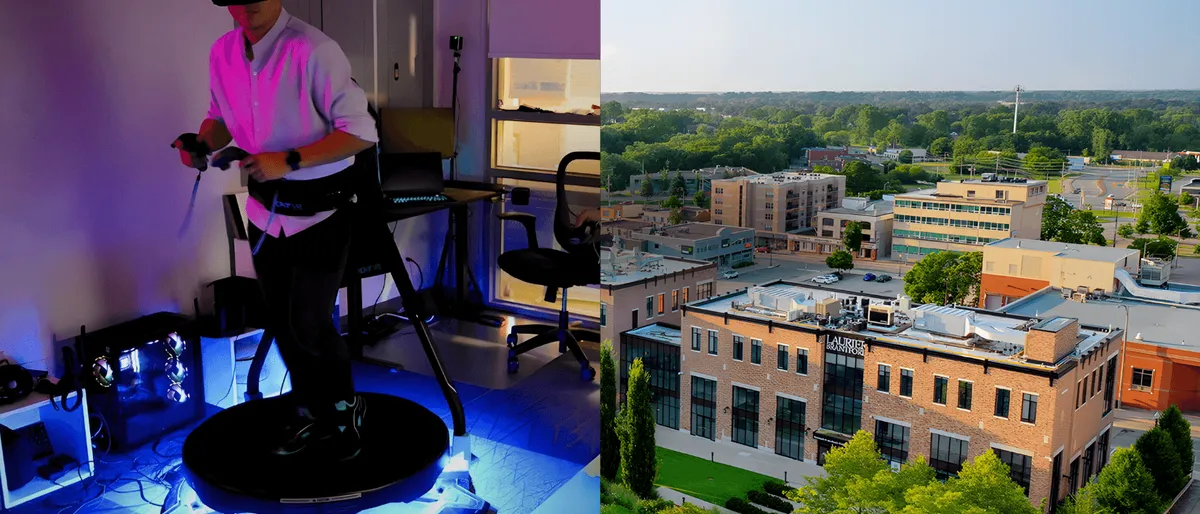
The day opened with a keynote from Dr. Sadeem Qureshi, Assistant Professor and Graduate Program Coordinator in UX Design at Laurier, who introduced the discipline and its applications. A hands-on design thinking workshop followed, led by LearnIt facilitators. Students then joined a Q&A with members of Laurier’s UX Design Student Association. Dr. Maurita T. Harris, Assistant Professor in UX Design and Social Justice, introduced the design challenge and its constraints. Dr. John E. Muñoz ran a UX Lab demo that showed students the research tools and methods professional UX designers use every day.
Then students toured the campus with a specific prompt. If this were my first day at Laurier, what might be hard? They looked for hard-to-find places, missing information, spaces where connection happens, and opportunities to improve the experience.
Why Designing for Yourself Changes the Work
The most effective design thinking workshops put students in direct contact with the problem they are solving. In this case, the students were the users. They walked a campus with fresh eyes, noticing what feels confusing, what feels welcoming, and what feels like a dead end. Then they returned to a room to build something that addresses those observations. That is design thinking the way it is meant to work.
Students weren’t designing for an imaginary persona. They were designing for someone exactly like themselves. A young person arriving at a new campus, trying to figure out where things are, where they belong, and how to get involved. That proximity to the user experience produced ideas that felt grounded and practical rather than abstract.
The People in the Room
Kaitlyn Hiff, Strategic Relationship Officer in UX at Laurier, organized the day. Her work made the logistics invisible and kept the learning in focus. The academic depth came from Dr. Qureshi, Dr. Muñoz, and Dr. Harris, each of whom brought genuine enthusiasm alongside professional expertise.
What set this workshop apart was the presence of UXDSA student mentors: Alexandria Brown, Clara Mendiola, Emily McClure, and Rebecca Olaniyi. These university students showed high schoolers what the path forward looks like in concrete, relatable terms. They answered questions about coursework, campus life, and what it actually means to study UX design. For students weighing post-secondary options, that peer-to-peer perspective is uniquely valuable in a way a career fair rarely is.
Jason Verhoeve, Manager of Orientation Programs at Laurier, provided the institutional context that made the design challenge authentic. His involvement confirmed that student proposals would be heard by the people responsible for shaping orientation experiences at the university.
What Students Produced
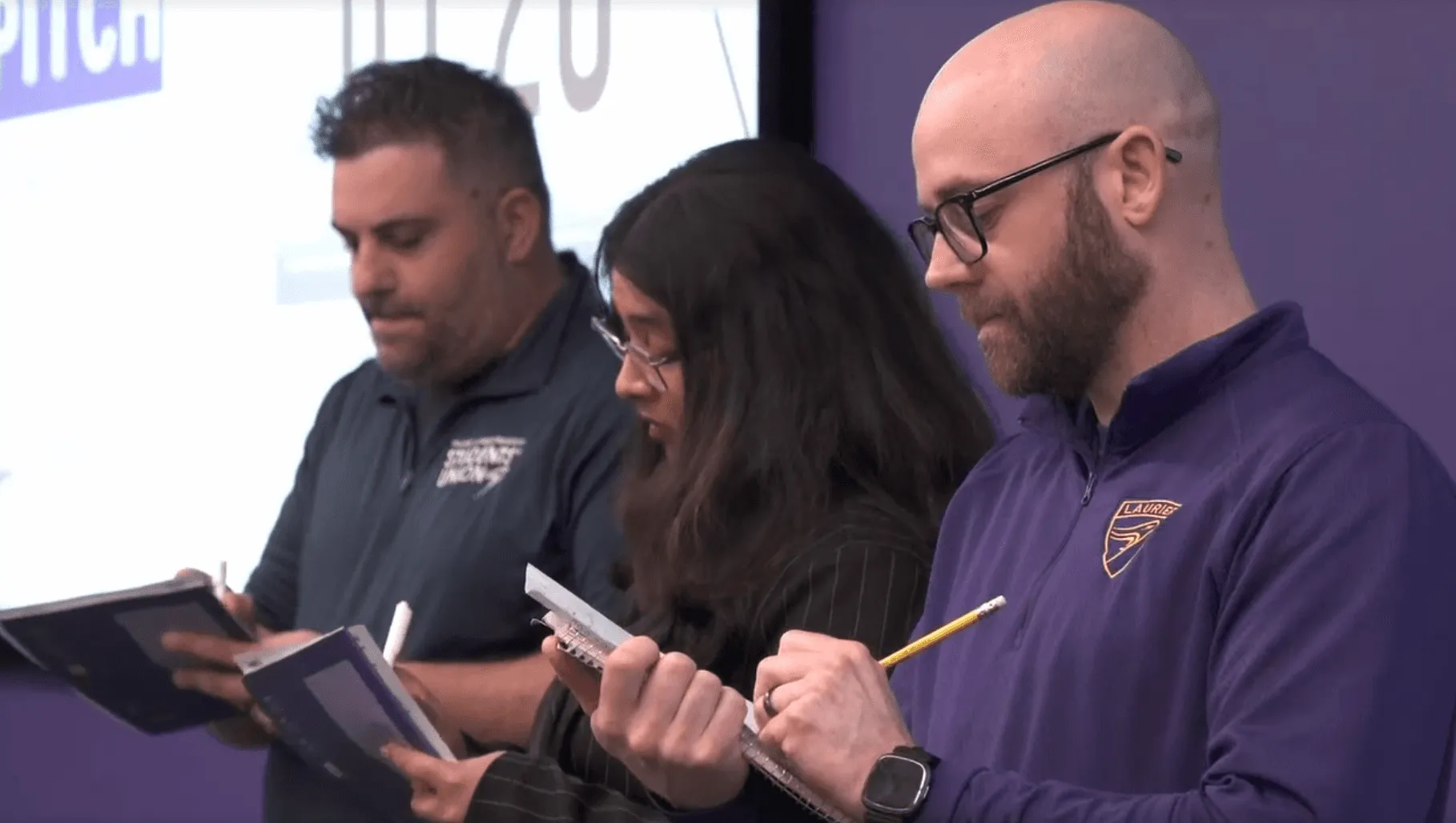
The final presentations covered a wide range of solutions. Apps, navigation systems, campus experiences, and physical installations all emerged from the design process. Each team had to defend their concept to a panel of judges. They explained their user research, their design decisions, and how their solution addressed the specific challenges outlined in the brief.
Students practiced user research, empathy mapping, ideation, prototyping, and persuasive presentation in a single day. These are foundational UX skills, but they are also foundational life skills. Understanding other people’s needs, creating solutions under constraints, and communicating your thinking clearly. Those are skills that travel into post-secondary applications, co-op interviews, or a career conversation later in SHSM.
This is also the second time in recent months that a Brantford-campus visit has anchored a LearnIt SHSM workshop. An earlier session brought BHNCDSB students to Laurier Brantford for a futures thinking workshop with the YMCA. Two different boards, two different partner asks, one campus. It keeps showing up as a setting where authentic challenges and post-secondary exposure can happen inside the same day.
Thank you to the students and educators from the Waterloo Catholic District School Board for showing up ready to design.